How Planning a Wedding has Changed in 30 Years

My daughter just got engaged, December 2018! I’m so excited for her and love her fiancé and already feel like he is part of the family. But now that we are a few months into wedding planning I’m certainly noticing many differences in how things are done now compared to 1988, when I got married! I think social media may play a big role in most of the changes. I’m starting to be able to just roll with the punches and getting used to this sentence, “Mom, that’s not how they do things nowadays.” We are starting to be able to laugh about the differences and the new ways, but at first I almost felt hurt – thinking thoughts like, “Was our way not good enough?” “What’s wrong with what we did?” and “Don’t you respect my input and value my input and WISDOM – emphasis on wisdom?” Oh, but Pinterest, Facebook, Instagram, The Knot, and Google  – the WORLD WIDE WEB – has woven quite the web.

Hashing this out is a little bit of therapy for me. I must preface this all to say a little background about what this means to me. When I got engaged, my fiancé (now husband) and I paid for and planned our wedding. That in itself was a little unconventional, but to afford even a small wedding, we had to do it – and this was on my small teacher’s salary. My mom died when I was young, and paying for a wedding was not really in my father’s budget. So this was truly planned and paid for by us. At the time I really missed not having my mother there to experience  this with me, but on the other hand, I did enjoy doing this with my future husband. So when my daughter got engaged, I realized that now I get to experience the mother/daughter relationship of wedding planning. I didn’t really know what that should or would entail and am learning as we go.

Decided years ago, my husband and I set aside money for our two daughters that would be for their weddings. So, when she was nearing that engagement time, I told her about this “stash” that was for her. We will give her that much and she and her fiancé will add to it to achieve the budget that they want for their wedding. I feel like this takes a lot of pressure off of us trying to manipulate HOW the money will be spent. They can spend it how they want to.

But, as we started talking about all things wedding and planning, here are some of the differences I’ve noticed.

The Engagement – When I got engaged, my husband and I had been talking about marriage matters and realized we were destined in that direction. So, as I was thinking about how I would be able to afford a wedding (since the bride’s family is traditionally responsible for this cost) I simply asked him when he was thinking this wedding would be. At that very moment, he turned around and said, “Karen Louise Schwark, will you marry me?”  No audience. A beautiful, simple moment. He tells everyone I proposed. Maybe I did. Maybe it was already in the making inside both of us. But we knew. And once those words were out, we were engaged. We then went and got the ring and made it official, and of course he asked my dad for his blessing.

Today – people are not engaged until they have that perfect Instagram moment. In my mind they are truly already engaged. But to them, it is not until it is the perfectly smart phone photographed moment where they can announce it to everyone at the same time. It does make for a great memory and I love the new way, but I think this can be a little stressful to “get it right”.

When Sarah’s fiancé had the ring, he texted back and forth with Sarah’s best friends and me and planned out the surprise event that would include everyone. Most of the planning happened in small snippets of time by Snapchat – he made a group chat – and we could all give our input. I think he changed his plans 10 times based on feedback he got from each of us. Somehow he was able to have people from different cities all arrive at the location and sneak into our hiding spot without Sarah knowing – and then we could all celebrate the event with her. He even orchestrated elaborate decorations and about 20 balloons and lots of lit candles and a decorated archway all while Sarah was sent away for a 30-minute errand.

The Wedding Planning – When I got married, we bought wedding magazines that had photos and ads and checklists and articles. The magazines even offered help in planning that perfect honeymoon. That worked great for the day without the world wide web at your fingertips. I found my wedding colors, styles, and made up a scrapbook of the things I planned for our wedding. Maybe you can still buy these magazines, but I haven’t seen Sarah use one.

Today, there is an app for that. The Knot – The Wedding Planner at your fingertips Actually, it is pretty cool. I would have loved it. It helps you create a budget, and it helps you find vendors and venues in your area that fit your needs. You make up a profile and see photos, descriptions, and price ranges of these vendors and can message back and forth to set up appointments at your convenience, even if that happens to be in the middle of the night when you can’t sleep!

How to Invite your bridesmaids – I called my friends and invited them to be my bridesmaids (on a land phone) and they actually answered their land phone and said “yes”.

Today, my daughter and her friends have put much more effort into how this is done. My daughter asked for water color pencils for Christmas, and then once engaged, began painting individually different and fitting cards to invite her best friends to be her bridesmaids. She composed a thoughtful note to each one about how much they meant to her and how she would love them to help her prepare for her big day. BTW, I think that the grooms still just do the phone call thing.

Matching Bridesmaids – EVERYTHING matched back in the 80’s. That means even the shoes were dyed to match.

Today, matching styles of bridesmaid dresses is optional. Often times the trend is just to match the color of the dresses. Everyone can wear the style of dress that they like and looks best on their body type.

There is even a website where you can order your dress, have it shipped to you and if it doesn’t fit, you ship it back!

When I started looking for a Mother of the Bride dress, I happened upon this website called, JJ’s House. This site is pretty cool because you can find a multitude of styles in every color and size. You click and order, it’s sent to you, you try it on, and then return it if you don’t like it. It turns out Sarah and I found the perfect dress for me at JC PENNEY on clearance, but I was going to try this option next.  I’m trying to get with the times.

Planning the Honeymoon – We went to a travel agent. We knew we wanted to go somewhere in New England, but this highly trained individual helped us plan the perfect trip with airfare and hotel bookings, and since we wanted to stay in a bed and breakfast, gave us suggestions on how to find them as well. We wrote a handwritten letter to the chamber of commerce of the town where we planned to stay and were sent a big packet of travel brochures on the areas where we would visit. Can you believe it?! Think about how much time went into all of that!

Today, it takes a small fraction of the time to plan the honeymoon and it can be done in the comfort of your living room. I watched my daughter and her fiancé as they pulled out their smart phones and starting googling perspective places. Once they decided where they wanted to go, they logged into their Airbnb account and found where they wanted to stay. And these places are reviewed by guests and are hosted by superhosts,. I’m just truthfully in awe of the outcome of her quick, yet amazing results. If you’ve not gotten on the Airbnb bandwagon, now is the time.

Photographer – Back in the 80’s there was no such thing as digital photography. We used film. We were quite pleased with our wedding photographer, though. He was a newspaper photographer and very good at capturing the moments. He did things a little different from what most of my peers used for their wedding photography. He GAVE us the negatives. He printed out the photos and once he gave us the negatives, we could make as many prints as we wanted to from them. Most of my friends chose photographers who would charge a price for the proofs, and nice quality prints.

Today – the cost is much higher for a photographer, but the results, due to modern technology are amazing. There is no chance of a photographer over-exposing or forgetting to put film in the camera (yes, that was a risk with film photography). Today, the photographer can SEE what the picture is going to look like right away. There is no extra cost to the photographer to take MORE pictures. The digital photographer can use special filters and has much more control over altering a photo as needed after the moment has passed.

The Invitation and RSVP – There have been lots of changes here. In our day, most invitations were on a white or beige fine quality paper printed with black ink and the first line usually began with the names of the bride’s parents requesting the honor of your presence. The RSVP was a separate card that you returned by mail to the hosts to let them know that you were coming. Also, included may even be a hand drawn map to the church and/or reception.

Today – first, the clever introduction of the “save the date” announcement! I love that idea! Also, designs can be prepared digitally online including color, art, and even photos of the couple. And just this month I RSVP’d to a wedding through the website, The Knot As I look at that website, I see it is a whole WEDDING PLANNER! Now with the click of a button, I can order her a gift or contribute to her honeymoon. Well, that makes it easy. And gone are the days of inserting a hand drawn map, thanks to Google Maps or Apple Maps.

Gift Registry – My fiancé and I went to a department store and picked out items, especially the dishes to put on our registry.

Today, I think people register at a few stores and items can be purchased online or sent to the couple. Like I said, I may even just order a gift for my friend’s daughter on her wedding planning site! So easy!

The Venue – There was no question where our wedding would be. It would be in the church where my fiancé and I attended. We were married by the pastor who preached at that church. We went to pre-marital counseling with this preacher. We never even considered any other options.

Today it is just about as common to not get married in a church as it is to marry in a church. Outdoor weddings, barns, boats, on a marathon race course, or even an old train caboose. And what has really become common is venues that transform from wedding venue to reception venue. That’s exactly what she chose. It is a beautiful place, and I’m excited for her.

The Cake – I loved our cake. We opted to not have a bride and groom couple sitting on top, but we did have the traditional white cake for the bride and chocolate cake for the groom.

Today – As Sarah was figuring out her budget, I asked her about her cake. She says she may not even have cake. WHAT?! I have been to weddings recently and this does not fit the norm even for today – I think. But she says to me, “Mom, I don’t like cake and we don’t have to have cake. We can have other kinds of desserts.” I have had time to get over the shock factor of that statement. But, as I’ve heard her plan, she is planning for everyone’s palates to be pleasantly appeased. I just pretty much feel like having a panic attack after each, “Mom, it doesn’t have to be that way these days” statement. I picture her looking at my mom face and thinking, “Oh, mom!”, and then I’m thinking, “I don’t want to be the old fashioned – “Oh, Mom”! So . . . deep breath . . . my prayer has been that the planning process will draw us closer together. I can now laugh at the “Oh, Mom!” moments, and I think she can, too. No cake? Fine. Desserts? Yes. Taco Bar? Yes, that, too.

Wedding shoes – Sparkly. That’s what I had. I wore them once.

Today – Sarah may wear white Birkenstocks under her gown (which I am thankful she is wearing a traditional white gown and, I must say that it is gorgeous – which I thankfully did get to go help her pick out along with her bridesmaids). A friend of mine recently wore flip flops under her gown as did her bridesmaids, and that was a hit at the wedding, so I’m feeling pretty cool with the Birkenstock idea. Hey, Sarah’s thinking comfort and thinking ahead to something she’ll get use out of after the day. I guess it’s a practical idea. The mother of the bride will wear classy pumps, though. I can’t pull off the Birkenstocks!

Many things have changed. But the important things have not. Here is what is the same between them and us:

They love each other. They are planning for a future. They believe in celebrating their special union with their friends and family. They are honoring their parents. They write thank you notes. Jesus is in the center.

I wish them the very best. I’m very excited for not only the day, but their future together. May we cherish these moments.

How I Finally Discovered I Can Conquer Big Goals; and Why I Don’t Call them Resolutions Anymore

As the new year approaches setting new year’s resolutions is the common cliche thing to do. I hate to even call them my new year’s resolutions any more because of past failures. There have just been too many times that I’ve started something only to begin faltering in February, and then by the time March hits, I’ve forgotten altogether the resolution that was begun only three months earlier.

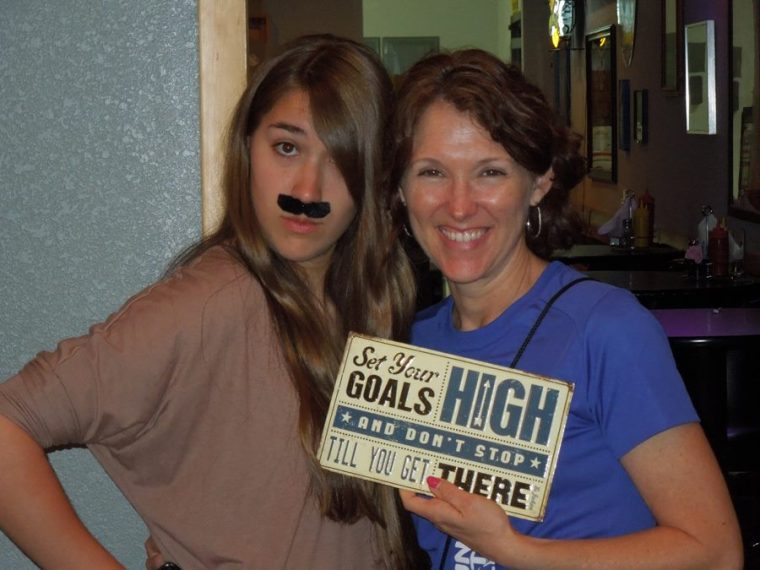
Sarah and me - goals

Something has changed, though, in how I approach the New Year thinking on “Resolutions”. The issue is in the connotation of the word. Resolutions is defined as “a firm decision to do or not to do something,” which often causes you to neglect the celebration of progress. Instead, it usually results in an all-or-nothing mindset, which, from experience, doesn’t get you far in achieving your long-term dreams and aspirations. Resolutions aren’t all bad, however. I mean, I love fresh starts, and what better time to have one is in the new year. So instead of getting rid of the idea altogether, let’s reframe it. Let’s think about New Year’s Goals, instead.

Goals are defined as “the object of a person’s ambition or effort; an aim or desired result.” A goal sets you on a trajectory for success, even if you fall short. But I have found that goal-setting can be more difficult than setting resolutions. It takes intentionality and thought to choose meaningful goals for the new year that are good uses of your precious time and energy. So through the years, I have come up with some guidelines to help make the most out of your New Year’s Goals.

Questions to ask yourself as you make your resolutions (or write your goals):

Does your goal fit with your personal mission statement?

A personal mission statement is simply stating what drives you forward. Every goal you set should line up with who you are and where you want to go. When you die, what do you want on your epitaph? My personal mission statement is “I want to love God, love others, be the healthiest me I can be today, and help others to do the same.”  This statement should be short enough for you to remember it.

Does your goal fit with your other priorities and/or goals?

What are your other priorities? If your priority is family and your family resents the time that you spend on said goal, then you may want to rethink your goal.

Do you have a support system in place to help you reach your goal?

Do you have friends or family members who may want to join you in accomplishing the same goal? Do you need to hire a personal trainer or nutritionist? Is this a goal that you should discuss with your family to make sure they are behind you and discuss what that support actually looks like?

Are you allowing yourself a reasonable amount of time to complete your goal?

This is where you need to know yourself. Sometimes a goal can be so long that you lose interest. But, sometimes I’ve made the mistake of not allowing myself enough time to accomplish my goal. If you have a goal that will take you a year to accomplish, break it down. How much time/effort do you need to put into it each month, each week, and then each day? Does your support person understand that and how can they be an encouragement to you?

Have you thought about the action steps you plan to take to accomplish your goals?

How will you break down your goal into smaller goals? What will you accomplish each week? When will you work on your goal?  

Is it worth the effort put in EVEN if you fall short of your goal?

Sometimes you don’t have control over the completion or success of your goal. Is it still worth trying for it if you don’t have a 100% chance of knowing that you’ll succeed? What benefits are there in working toward the goal even if you don’t succeed?

How will you celebrate when you accomplish the goal?

What will you do when you accomplish the goal? Sometimes it helps to have a celebration reward dangling out there in front of you as you are striving toward that goal. It is one more tool in your bag to help you stay motivated.

I’d like to give you some of my life examples of big goals I’ve accomplished in the past few years with just a few short anecdotes on how/why I chose THAT goal. These are some of my biggest goals I’ve accomplished in the past few years. They have all worked only because they pass the 7 question test above.

  1. Reading through the Bible in one year. This was actually harder than I thought it would be. How I accomplished this was to transform my driving time to & from work to listening time. I listen to the Bible along with a devotion that helps me think about the day’s reading and apply it. Each day I hear Psalms or Proverbs, New Testament and Old Testament.  I like this goal because it fits beautifully with my personal mission statement and who I want to be. I want to start and end my day with God and His thoughts and hear from Him how to love others. He helps me keep things in perspective. (Link:  Read through the Bible in One Year )  I have completed this plan in 2017 and 2018. I decided my second time to read through in a different version.
  2. Become a personal trainer. This goal seemed daunting to me, yet some strong desire in me wanted to help others in their fitness journey. This is the one I had to keep asking myself if the time spent studying and learning the information would be worth it EVEN if I didn’t pass the test? Would it be time wasted? I also had to break down my study time to fit around my other priorities and responsibilities. I devoted at least 2 hours a week for about 9 months. Then it came down to about 2 hours a day for 6 weeks before taking the test! I’m so thankful that I took the risk, devoted the time, and invested the money because now I have my dream job! I come home from work each day with a full heart.
  3. Cook through the Run Fast Eat Slow Cookbook. If you read my last blog entry, you’ll know that I did this. But what you don’t know is that I would have never set out to do this. The reason this became a goal is because it hit all of the above questions. It was natural! It was fun to accomplish this with loved ones and to share the good foods as an outpouring of love that was healthy AND delicious. But I had to be gracious with myself. I didn’t want it to become a drudgery to be in the kitchen cooking. So, usually I’d plan to cook new recipes with friends or my daughter. And of course, it’s always fun to post on instagram! Check out the authors’ blog:  https://runfasteatslow.com, and here is a link to my previous article: How a Cookbook Impacted Me
  4. Run 1,000 miles in one year. I chose this because I had never tracked my running for a year to see how far I actually do run. 1000 miles ends up being about 20 miles per week. I asked two of my running buddies to join me. I chose to do this after seeing the opportunity through “I love to Run” app online.  On their site, you order the medal in January and log your miles throughout the year. Then at the end of the year, they send you the medals. The plan is for us to celebrate with our spouses eating a yummy dinner (probably recipes from Run Fast Eat Slow since I’m kind of obsessed with that). I just want us to thank our husbands for supporting our fitness goals – and those long runs feed our spiritual and emotional wellbeing as much as our physical health, which makes us better wives and mothers. ilovetorun – where running meets humor –   Also, if you’d like a beginner running plan, check out my previous blog entry: How a Running Hater Becomes a Running Coach
  5. Read a book a month with my daughters. Two years ago my daughters wanted to do this. We had so much fun picking out our books. When we did this, it brought us closer together (my dear husband joined us, too – and we loved that). We still talk about the books we read that year.  Check out our topic guide. This just helped give us direction and varied our reading:
  • A book with one word in the title
  • A book with a number in the title
  • A book that will be made into a movie
  • A classic
  • A biography
  • Historical Fiction
  • A book that will make you cry
  • A book on tape
  • A book written by a female
  • A book by one of your favorite authors
  • A book you judged by the cover
  • A funny book

Links to the actual books we read will be at the end of the article.  But I have to tell you about what we did this year. I’m so excited about this! We had a White Elephant-style book exchange on Christmas Eve, where both friends and family came with a book wrapped like a present. Then each wrapped book was handed out. My daughter read a “Twas the Night Before Christmas” rendition that had the word “right” and “left” put in an insane amount of times. We passed our books left when we heard the word “left” and passed the books right when hearing the word “right”. (Link to game Christmas gift exchange game) Then at the end of the story, we opened our books one by one letting the purchaser share why they picked that book. Through the year, as people read their books, they are to put them back on our shelf for others in the “book club” to read. So, hopefully, we will all have a chance to read all of these books. I have a bookshelf devoted to acting as the library for us to put the books when finished reading the so the next person can read.

Here are the books we read the year of 2016 (I can only remember 9, so I’m not sure)

Room by Emma Donoghue

The Curious Incident of the Dog in the Night-Time by Mark Haddon

Child 44 by Rom Rob Smith

Animal Farm by George Orwell

Bossypants by Tina Fey

The Fault in Our Stars by John Green

Bridget Jones’s Diary: A Novel by Helen Fielding

And the Mountains Echoed by Kaled Hosseini, author of Kite Runner

All the Light We Cannot See by Anthony Doerr

So, I must end with a challenge to you. Don’t be afraid to dream big and go after those goals. I would also LOVE to hear some of your goals in the comment section! I’m cheering for you!

How a Cookbook Impacted Me

I have often judged the value of a cookbook by the number of recipes that I actually cooked. It’s a good cookbook if I make 5 or more recipes and continue to make those recipes. This is not a written code. It’s just something I’ve noticed that I do. Some people (like my husband) don’t even need a cookbook. They can just throw together whatever is in the refrigerator and it tastes like something prepared by a Chopped Champion. However, I like a good recipe. It needs to be an easy-to-follow recipe that does not assume I know ANYTHING about cooking. But, also, since I’ve been on a health kick for 11 years now, I’m more motivated to cook foods that are purposeful. What I mean is that I want to know that they are good for me and why.

Enter my purchase of the cookbook entitled, RUN FAST, COOK SLOW, in January of 2017.

Some people may say that I’ve become a little obsessed with this cookbook. I often find myself calling it “My cookbook”, and have to explain that I didn’t write it, but it belongs to me and I love cooking from it. After noticing that I had gone beyond my threshold of what I considered a good cookbook, (i.e., I had actually cooked 30 recipes and was continuing to want to make more plus repeating those recipes often), I realized there was something special about this cookbook. So here is the story of how this cookbook impacted me.

Beginning in February of 2017, I asked for my birthday to meet up with my college daughters in their college town in a quaint Airbnb and play games and cook a meal from this cookbook. My husband told me to make a list of 10 recipes and he’d choose from that list. Everyone pitched in to cook the various chosen recipes and the food was delicious and it just made me want to try more. Read on to see what the act of just writing the list started.

I then had to complete the rest of those ten recipes! But then as I looked at other recipes in the cookbook, my list grew because. Finally one day I realized I had probably made 30 recipes. So, I thought – I’ve trained for many half marathons. Why not cook through this whole cookbook like I’m training for a race? Why not make a big cooking goal similar to my running goals? So, the journey began. I allowed time – I didn’t rush in a frenzy, but instead wanted to savor the process.  I’d like to share with you some of the beautiful things that have happened as a result of my RUN FAST, COOK SLOW, big gigantic cooking goal!

  1. I now look forward to cooking.  My husband has to work every other weekend, so those weekends when he was working became one of my favorite times to fill up my refrigerator with these healthy indulgences.  This became a new hobby, but it’s a hobby that enhances my other hobby (running) and my career (personal trainer and running coach), and benefits my family and friends. (This is huge because, I don’t really love cooking – this was a new experience).
  2. It is bringing friends and family together. We had a nursing student living with us during the first part of 2017 and she was almost like my muse. The energy we had cooking together and laughing are memories I’ll cherish. Although she has moved out of the house and is a full-time nurse, we still make time to cook together.  My older daughter, who loves to cook, has inspired the concept of food-prepping to me. In fact, for Christmas, I gave her the Run Fast Cook Slow cookbook, and wrote notes throughout the book.
  3. BIG GOALS inspire me.  I’ve always done better with big goals. However, I didn’t realize that until cooking through the book.  What was great about this big goal, is that I had friends toward the end wanting to help me to accomplish it. It made me try the recipes that I thought I wouldn’t like (some of those ended up on my top 10 favorite list). I even found that several of the ones with no pictures have become some of my favorites. It truly broaden my cooking skills and introduced me to new foods as well as helped me to find ways to like foods I normally don’t like. Read “How I Finally Discovered I can Conquer Big Goals; and Why I Don’t Call them Resolutions Anymore” – my next blog entry
  4. My blood work went from good to amazing! After my last doctor visit, my doctor walked into the room saying that I’ve made it to his top 10 healthiest patients. (I told him I really wanted to be number 1 – he laughed and said I might be in the top 5 actually – ha ha – I love it). He was amazed at my blood work! What’s interesting is that I only had numbers for the last 2 years. I started cooking from this cookbook 1 1/2 years ago so my blood work numbers cover the time starting about 4 months before starting my cookbook challenge. My cholesterol improved in the first year, but the next year, it improved even more.
    Total Cholesterol LDL HDL Triglicerides

    2016

    167 mg/dL 73 mg/dL 84 mg/dL 48 mg/dL

    2017

    156 mg/dL 58 mg/dL 89 mg/dL 43 mg/dL

    2018

    166 mg/dL 52 mg/dL 104 mg/dL 50 mg/dL
    Healthy Ranges 107-200 < 130 35-86 35-135
  5. Personal Training Food Conversations – Before becoming a trainer I struggled finding healthy recipes. I got stuck in a rut of eating the same foods week in and week out. I did okay and was trying to make lifestyle changes that were healthy but since there is so much different and even contradictory messages about nutrition, it landed me having uncertain direction. Cooking through this cookbook started about a half year into becoming a certified personal trainer. While I cannot prescribe a meal plan for my clients (Missouri law), I can talk about healthy eating, and habits and recipes and certainly model a passion for making healthy choices and even let them try some of the delicious recipes out of my lunch sack!  A majority of my clients have even purchased the cookbook, and one of my classes that I teach has asked that every 6 weeks we have lunch featuring one of the recipes!

When I completed my goal, I rewarded myself with getting book #2 Run Fast Cook Fast Eat Slow. But while I awaited the arrival of said book, I got sneak peak from Runner’s World. Follow this link for the recipe:

Runner’s World – Thai Quinoa Salad

I highly suggest you follow the blog from the cookbook authors, Shalane Flanagan & Elyse Kopecky.

Run Fast Eat Slow Blog

And definitely order the book.

Run Fast Eat Slow – from Amazon

Description of the book on Amazon:

“From world-class marathoner and 4-time Olympian Shalane Flanagan and chef Elyse Kopecky comes a whole foods, flavor-forward cookbook—and New York Times bestseller—that proves food can be indulgent and nourishing at the same time. Finally here’s a cookbook for runners that shows fat is essential for flavor and performance and that counting calories, obsessing over protein, and restrictive dieting does more harm than good.

Packed with more than 100 recipes for every part of your day, mind-blowing nutritional wisdom, and inspiring stories from two fitness-crazed women that became fast friends over 15 years ago, Run Fast. Eat Slow. has all the bases covered. You’ll find no shortage of delicious meals, satisfying snacks, thirst-quenching drinks, and wholesome treats—all made without refined sugar and flour. Fan favorites include Can’t Beet Me Smoothie, Arugula Cashew Pesto, High-Altitude Bison Meatballs, Superhero Muffins, Kale Radicchio Salad with Farro, and Double Chocolate Teff Cookies.”

In closing, as I reflect over what cooking through the cookbook has done for me, I must say that it changed me. Also, just setting a big goal was a great experience, because each week, I would think, “What do I need to do this week to help me to get towards my finish line?” So, get after it. Pick your goal. You can do it. Let it change you, but please enjoy the journey, and bring others along with you.

Recipes in the pictures above are all from Run Fast Eat Slow unless noted below that they are from their second book, Run Fast Cook Fast Eat Slow:

  1. Fig Jam Cookies (with daughter, Sarah)
  2. Super Hero Muffins 2.0 “Beet Blueberry Molasses from 2nd book, Run Fast Cook Fast Eat Slow
  3. Can’t Beet Me Smoothie
  4. Anti-Inflammatory Chocolate “Milk” from Run Fast Cook Fast Eat Slow (with daughter, Sarah)
  5. Green Apple-Fennel Salad with Hazelnuts
  6. On-the-Run Frittata Muffins
  7. Homemade Hazelnut Milk (with daughter, Sarah)
  8. Whole Roasted Chicken with Herbs
  9. Another picture of Whole Roasted Chicken (with friend, Jessica)
  10. Root Lovers’ Winter Salad
  11. Blueberry-Lemon Cornmeal Scones
  12. Thai Quinoa Salad from Run Fast Cook Fast Eat Slow

How a Running Hater Becomes a Running Coach

It all started when my daughter, Hannah, age 9, was required to run a mile three times a week while in gymnastics. I thought, “Oh, that’s terrible! I’ll do it with her so we can hate it together!”  Well, what happened was I started feeling better from my running, even that little bit! I needed that. I was caregiver for my father with dementia while raising four children (at that time – ages 4, 9, 11, and 13). I started having more energy throughout the day. It actually felt good to sweat. As I marked off in my little book my accomplishment for the day, I felt a sense of gratification. I did it. It didn’t matter how fast I went. I did it. There were things I couldn’t control in my life, but I could do this.

Then I lost my father. That was hard. We moved soon after his death to a town where I didn’t know anyone. So I joined a gym, hired a trainer, and started increasing my running to 30 minutes at a time. It was very therapeutic and it gave me something positive to do while I was grieving and beginning a new life in a new town with my family.

A year later I ran my first 5K. At the time, I was so self-conscious I decided to fly across the country and run my first 5K in Florida where my aunt and uncle lived. I loved it! It was nothing like I imagined. People of all abilities and all ages were there! This was a female only race, which was kind of cool.  But one thing I vividly remember happened as I approached the finish line. The announcer gives a big shout out to someone finishing her 10K at the same time I finished my 5K! Wow! That amazed me! The next goal-inspiring moment happened as I rode the elevator with an older woman (probably in her 70’s) who was also wearing a race bib. As we congratulated one another, I learned that she had just run the 10K! Again – Wow! My younger 44-year-old self now had a new vision of my future 70-year-old self!

I call my trainer when I return home and say, “I may be crazy, but I now want to train for a 10K.”  I know that’s really not so crazy, but for me, a previous run-hater, this was a crazy notion. My trainer gives me a plan, I diligently train, and a couple of months later I ran that first 10K, and actually placed!

And then the next year, almost simultaneously,  I decided to train for a half marathon and was encouraged to start coaching a beginner running class.  Little did I expect the response. Thirty people took the class. This was 2009. What happened in that first class astounded me. The newbie runners became best friends. I kept asking, “Did you guys know each other before?” and they would assure me that this was where they met. Of the first 30 runners, 13 of them continued to sign up for races each month – running in a cave, or running in a zoo, or signing up for a relay. I couldn’t believe it! And those 13 trained for a half marathon and ran it that next year, 2010!

What I’ve discovered is that although running started somewhat as a solo venture,  I love the people I have met through running. It has really been about much more than running. It is about community, goals, and joining others who are taking a risk and sticking with it, and then actually signing up for that race and finally crossing the finish lines. And this running habit has also crossed over to other areas of my life. I’m not as afraid to try new things. And I’ve made lifelong friends to share, laugh, cry, and run with.

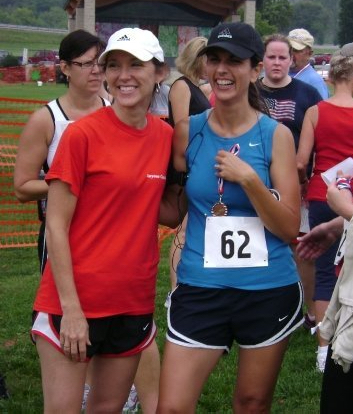
Lindy and me 2009
I’m on the left with Lindy. She was in the second beginning running class I coached. She just qualified for Boston this year, 2018!

In this blog, I’d like to share with you how you also can start running. I’ll share a running plan that has worked for hundreds of runners that I’ve trained, and also give you some helpful information on stretching, strength training, preventing  injury, how to stay motivated, and much more. But we’ll start here with my favorite beginner’s running plan.

Week # Run Increment Walk Increment Number of Cycles

1

1 minute 4 minutes 6 cycles

2

2 minutes 3 minutes 6 cycles

3

4 minutes 3 minutes 5 cycles

4

6 minutes 2 minutes 4 cycles

5

8 minutes 2 minutes 3 cycles

6

10 minutes 2 minutes 3 cycles

7

15 minutes 1 minute 2 cycles

8

30 minutes 0 minutes 1 cycle

9

35 minutes 0 minutes 1 cycle

The reason I like this plan is that it is easy to remember and easy to use. It is a run/walk plan. You build up your running increments while diminishing your walking increments. It is easy enough that most people can do it. The run/walk time always totals between 30-35 minutes.

Run 3 times per week including rest days between each run. Your body needs rest days to recover so it can grow stronger and ready for the next run. Don’t jump ahead weeks, even if you think it’s too easy. Your heart and lungs adapt pretty quickly. But bones, ligaments, and joints take the longest to adapt. They actually take from 6 weeks to 6 months to adapt. But we don’t know that they have not adapted until there is an injury (a sore hip, shin splints, an achy knee).

Invest in running shoes. Enough said. Please, go to a running specialty store and get shoes that are best for your type of feet and gait.

And finally, when you are running, run at a conversational pace. This is a pace that is about 3-4 steps per breath in and 3-4 steps per breath out.  Don’t worry about how slow you are going. Most improvements come during your easy pace runs. You build more capillaries, you increase your mitochondria count (that transports energy to working muscles), your stroke volume improves, and muscle properties adapt to running. You will become more efficient at running.  Continue reading “How a Running Hater Becomes a Running Coach”